The Dutch oven is the one pot that earns its shelf space every single day. It braises, it bakes, it simmers, it fries. If you cook at home with any regularity, you already know — or you're about to find out — that this is the piece you reach for more than anything else in the cabinet.
But walk into any kitchen store and you're met with two versions: bare cast iron and enameled cast iron. Both are heavy. Both hold heat like nothing else. The difference is in how you live with them.
Enameled: the everyday workhorse
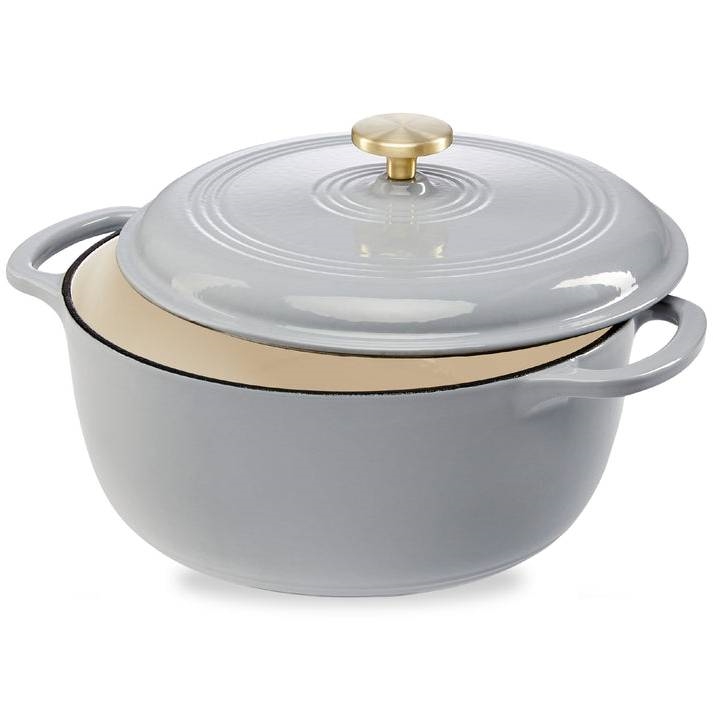
Enameled Dutch ovens — the ones with the smooth, glossy interior — are what most home cooks should start with. The enamel coating means you never season. You wash it with soap. You can cook acidic things like tomato sauce or wine braises without worrying about stripping a finish or picking up a metallic taste.
The enamel surface is also less reactive, which matters more than people think. A long-simmered ragu or a vinegar-based braise won't discolor or taste off. Cleanup is straightforward: soak, scrub gently, dry. No ritual, no stress.
The trade-off is durability at the extremes. Enameled surfaces can chip if you drop them or bang metal utensils against the interior. They're not fragile — these pots last decades — but they ask for a little care. Think of it like a good nonstick pan: treat it with respect and it outlasts three cheaper replacements.
Bare cast iron: the purist's choice
Bare cast iron Dutch ovens are the ones your grandmother had. No coating, no enamel, just iron and whatever seasoning you've built up over years of use. They heat faster, respond quicker to temperature changes, and develop a nonstick surface that gets better the more you cook.
The catch is maintenance. Bare cast iron needs seasoning — a thin layer of polymerized oil baked onto the surface — and that seasoning is vulnerable to acid, soap, and long soaks. A tomato-based braise or a wine reduction can strip years of buildup in one afternoon. You can re-season, but it's work.
Bare cast iron also weighs more than its enameled cousin, which matters when you're lifting a full pot from oven to counter. If you have wrist or shoulder issues, the extra pound or two is real.
What Kathy stocks and why
At KitchenSupplies4Less, we carry both because both have a place. The enameled line — think the classic cream, red, or deep blue finishes — is what we recommend for the cook who wants one pot that does everything without a learning curve. The bare cast iron is for the cook who already owns a well-seasoned skillet and understands the rhythm of iron care.
For most kitchens, the right answer is enameled. Start there. Learn what you actually cook. If you find yourself braising three times a week and wishing the pot heated up faster, then you add bare cast iron to the lineup. Not before.
One practical tip
If you buy one Dutch oven and never expand, get a 5.5- to 7-quart enameled pot in a neutral color. Big enough for a whole chicken, small enough for a weeknight soup. The size is the thing people get wrong most often — too small and you're splitting batches, too large and you're heating empty iron.
Buy the size that matches the meals you actually make, not the ones you imagine making.