Knife Skills with the Gear We Stock
A sharp knife is safer than a dull one. That sounds like something printed on a box, but it's true — a dull blade requires more pressure, slips more easily, and cuts you worse when it does. The knife is the most important tool in your kitchen, and the skill is more important than the price tag.
Here is what the three knives we stock actually do, and how to use them without looking like you're trying too hard.
Chef's knife: the one that does 80 percent of the work
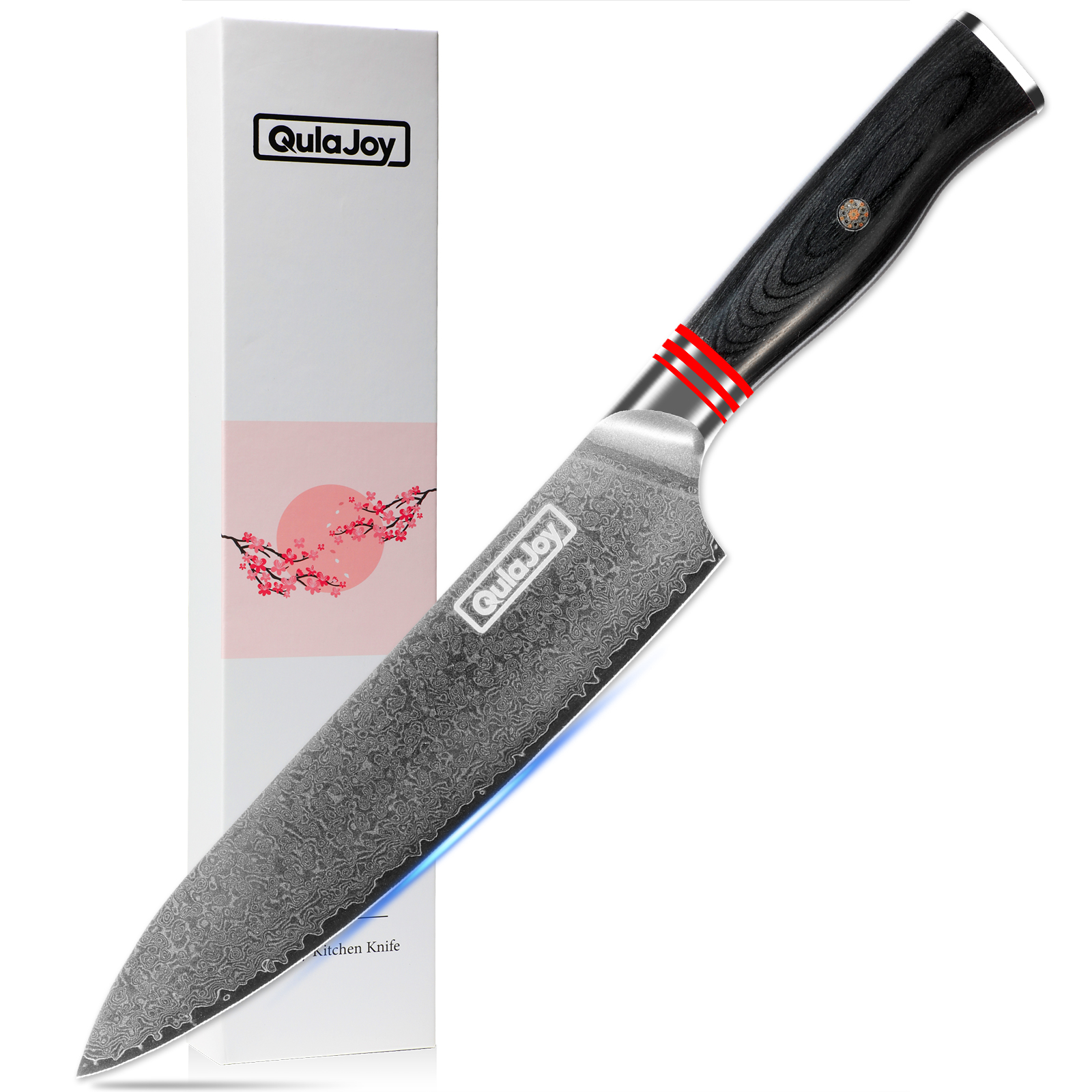
Eight to ten inches, curved belly, pointed tip. The chef's knife is the default for a reason. It rocks, it slices, it dices, it minces. If you only own one knife, this is the one.
The grip matters. Most home cooks grip the handle with all four fingers, thumb on one side, fingers on the other. That works, but it gives you less control than the pinch grip: thumb and forefinger pinch the blade just above the handle, and the other three fingers wrap the handle loosely. The knife becomes an extension of your hand instead of a tool you're holding.
The motion is a rocking cut, not a chopping cut. The tip stays on the board. The heel lifts and falls. Your guiding hand — the one holding the onion or carrot — curls under, fingertips tucked, knuckles against the blade. The blade rides against your knuckles, not your fingertips. That is how you keep your fingers.
Paring knife: precision, not power
Three to four inches, short blade, nimble. The paring knife is for the work the chef's knife is too big for: peeling apples, hulling strawberries, segmenting citrus, trimming fat from meat, cutting around a pepper stem.
The mistake is trying to cut on the board with it. A paring knife is designed to be held in the air — blade in one hand, food in the other. You're peeling, coring, shaping. The board is optional. If you're trying to dice an onion with a paring knife, you've chosen the wrong tool and you're making the job harder than it needs to be.
Bread knife: the saw you actually need
Serrated, long, with a scalloped or pointed edge. The bread knife is not just for bread. Tomatoes, citrus, cake layers, anything with a soft interior and a resistant skin. The serrations bite through the surface without crushing what underneath.
Use it with a sawing motion, not pressure. Let the teeth do the work. Pressing down squishes the crumb, tears the tomato, ruins the clean edge you're after. Slow, light, back-and-forth. The knife wants to saw — let it.
What we stock and what to buy first
At KitchenSupplies4Less, we carry forged and stamped chef's knives in a range of prices. Forged is heavier, better balanced, holds an edge longer. Stamped is lighter, cheaper, and perfectly adequate for most home cooks. If you cook daily, invest in forged. If you cook weekends, stamped is fine.
The paring knife should match your chef's knife in brand and line if possible — same handle shape, same weight balance, so switching between them feels natural. The bread knife matters less — it's a saw, not a precision instrument — but buy one with deep, pointed serrations rather than small, rounded waves. It cuts cleaner.
One practical tip
Hone your chef's knife every time you use it. A honing steel — the rod that comes with most knife sets — doesn't sharpen. It straightens the microscopic teeth on the blade edge that bend with use. Ten strokes, alternating sides, before you start cooking. It takes fifteen seconds and makes the knife feel new every time.
Actually sharpening — grinding a new edge — only needs to happen every few months for a home cook. But honing? Every single time. That's the difference between a knife that glides and a knife that fights.